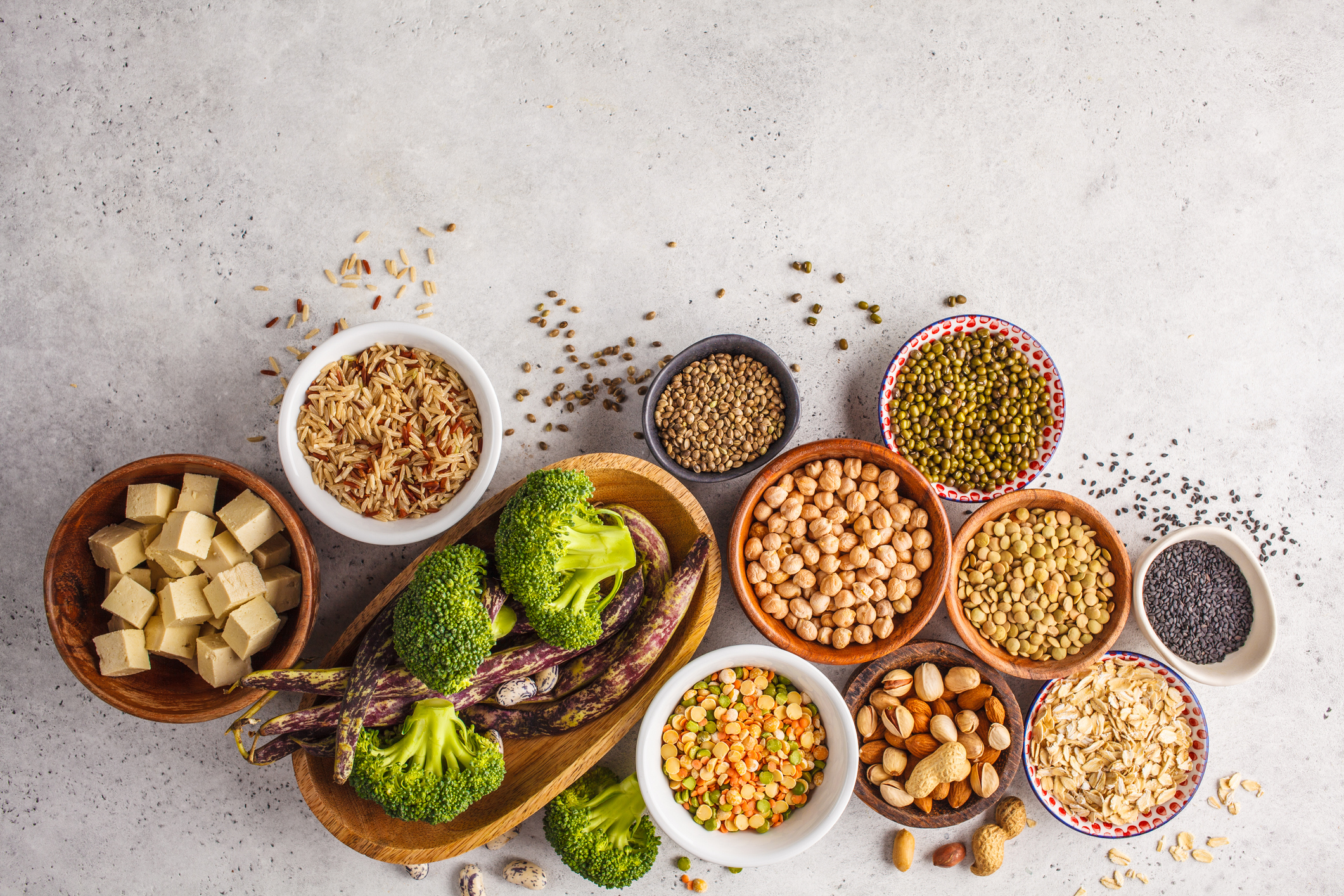
As global food systems strain under increasing pressure, plant protein isolates emerge as a revolutionary solution to nutritional and environmental challenges. Innovative companies are transforming protein production by extracting highly refined proteins from diverse plant sources, offering a sustainable alternative that promises to reshape how we feed the world, reduce environmental impact, and meet growing nutritional demands.
In this ECBF Deep Dive we explore the exciting opportunities of protein isolates.
Exec summary
Global Context
- Projected global population of 9.7 billion by 2050 intensifies pressure on food systems
- Animal protein production faces significant environmental challenges:
- High greenhouse gas emissions
- Excessive land and water use
- Contributions to deforestation and biodiversity loss
Plant protein isolates offer a promising solution
- Highly refined proteins with 90%+ purity
- Offer nutritionally adequate alternatives to animal proteins
- Provide lower environmental footprint
- Versatile functional properties (emulsification, gelation, foaming)
Current and emerging protein sources
- Established Sources:
- Soy: 90% protein content, complete amino acid profile
- Pea: 80-85% protein
- Wheat: Essential in bakery applications
- Emerging Sources:
- Chickpea: Excellent for egg replacements
- Canola: High nutritional quality
- Potato: Exceptional foaming capabilities
- Future potential: Mung bean, duckweed, sunflower, rice
Industry Challenges
- Technical hurdles involve developing sophisticated protein extraction methods that preserve nutritional integrity, balancing complex processing techniques while maintaining protein quality across different plant sources.
- Supply chain complexities include securing consistent raw material availability, managing global sourcing disruptions, and creating robust logistics networks for diverse plant protein ingredients.
- Regulatory barriers encompass navigating intricate food safety regulations, obtaining approvals for novel protein sources, and ensuring compliance with international food standards and labeling requirements.
- Cost of production challenges stem from substantial capital investments, expensive processing technologies, limited economies of scale, and maintaining competitive pricing against traditional protein sources.
- Consumer expectations demand innovative approaches to eliminate plant protein off-flavors, create authentic textures, and develop clean-label ingredients that meet evolving market preferences.
Innovation Strategies
- By-product valorization transforms extraction residues into valuable secondary products, implementing circular economy principles to improve economic viability of plant protein production.
- Advanced extraction technologies focus on developing solvent-free, low-temperature processing methods, pioneering milling techniques, and enhancing protein purification processes.
- Protein blend formulations create synergistic ingredients with enhanced functional properties, combining different plant proteins to improve nutritional profiles and application versatility.
- Targeted market expansion drives comprehensive marketing strategies, providing transparent communication and developing application-specific protein solutions across various market segments.
Investment Landscape
- Approximately €400-500 million invested signals growing investor interest in sustainable protein technologies and emerging food solutions.
- 27 VC-backed companies represent concentrated innovation efforts in plant protein development, primarily in the USA and Europe.
- 86 investment deals since 2012 demonstrate increasing market confidence and recognition of plant protein’s potential.
- Investments concentrated in USA and Europe highlight strong innovation ecosystems and advanced research capabilities.
Key Industry Perspectives
- Collaboration emphasizes sharing resources and expertise to accelerate innovation and develop comprehensive solutions across the plant protein ecosystem.
- Continuous innovation drives ongoing improvements in extraction technologies, protein sources, and functional properties to meet evolving market demands.
- Sustainable, clean-label solutions prioritize minimal processing, natural ingredients, and transparent production methods that resonate with environmentally conscious consumers.
- Application-specific expertise ensures targeted innovations that address unique requirements across different food production segments.
Future Outlook
- Growing consumer demand reflects increasing health consciousness and expanding plant-based lifestyle choices.
- Sustainability focus addresses critical environmental challenges by reducing emissions and developing more eco-friendly protein production methods.
- Potential to transform global food systems offers solutions for nutritious protein alternatives and more resilient food production.
- Technological innovations encompass emerging protein sources, advanced extraction technologies, and personalized nutrition solutions.
Bean There, Done That: Exploring Plant Protein Isolates
As the global population edges towards an anticipated 9.7 billion by 2050, the world’s food systems are under immense pressure to provide sufficient, nutritious, and sustainable food for all. Traditional reliance on animal-based proteins is becoming increasingly unsustainable due to their substantial environmental footprints. High greenhouse gas emissions, excessive land and water use, and significant contributions to deforestation and biodiversity loss are among the pressing concerns associated with animal agriculture.
In response to these challenges, plant protein isolates and concentrates are emerging as promising solutions. When produced sustainably and efficiently, plant-derived proteins offer nutritionally adequate alternatives to animal proteins. They have the potential to alleviate some of the environmental burdens associated with livestock production by serving as replacement ingredients in a variety of food products.
But the goal is not merely to replicate animal proteins – it’s to meet or even surpass their nutritional profiles.
However, the journey toward mainstream adoption of plant protein isolates is complex and fraught with obstacles. Technological hurdles in extraction and processing, supply chain complexities, regulatory barriers, and the imperative to avoid competing with essential crops for direct consumption all present significant challenges. Moreover, ensuring that these new protein sources meet consumer expectations for taste, texture, and affordability is crucial for their widespread acceptance.
In our latest deep dive, we explore the innovations shaping the plant protein landscape, the critical importance of these developments for our planet and population, and the collaborative efforts required to build a sustainable and nutritious food future.
Understanding Plant Protein Isolates
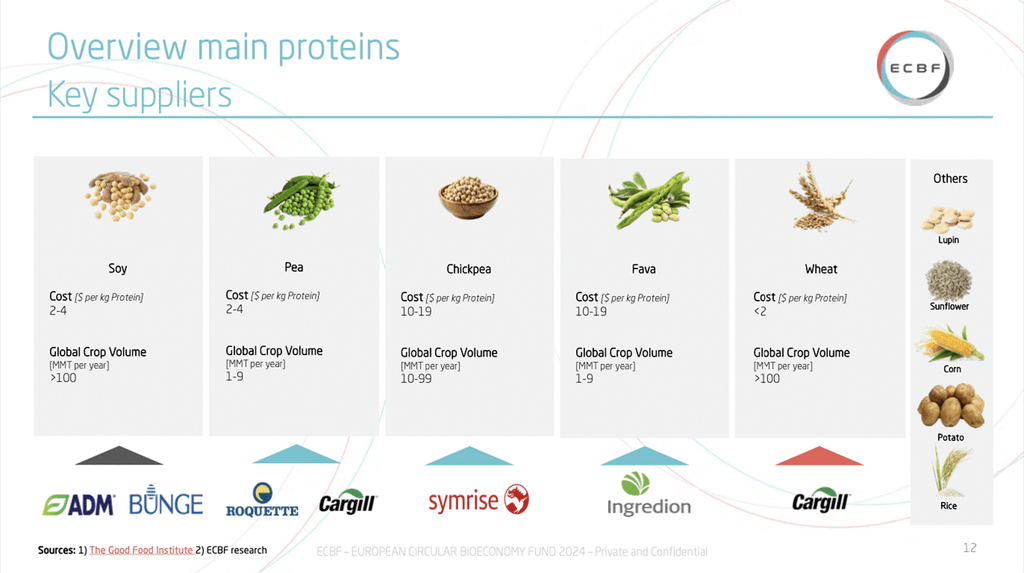
Plant protein isolates are highly refined proteins extracted from plants, boasting purity levels of 90% or higher. They are prized for their high protein content and essential amino acids, making them valuable in various food applications. Their functional properties, such as the ability to emulsify, gel, foam, and bind water, provide versatility in the types of foods they can be used to produce.
Additionally, depending on the production process and method, proteins derived from plant sources have a lower environmental footprint compared to animal proteins, contributing to reduced greenhouse gas emissions and resource usage. The growing consumer demand for plant-based diets and clean-label, allergen-free ingredients further drives their popularity.
Unlocking the full potential of plant protein isolates however requires significant innovation. Not only do companies have to overcome technical challenges in extraction and processing, they have to meet rising consumer expectations for taste and texture.
Development focuses on protein concentrates and protein isolates to cater to different market needs. Concentrates typically have 60–80% protein content and retain more of the plant’s bioactive compounds and micronutrients, which can be beneficial for certain nutritional applications. Isolates are more refined, containing 90% or more protein, and are preferred in products where a neutral taste and specific functional properties are essential.
However, these companies face several hurdles. Supply chain and sourcing issues can impact the availability and cost of raw materials, with global disruptions affecting consistent supply. Regulatory hurdles and market acceptance pose challenges as introducing new protein sources requires navigating complex regulatory landscapes and gaining consumer trust. Processing limitations and costs are significant, as developing efficient extraction and purification processes for new protein sources can be technically challenging and capital-intensive.
Despite these challenges, companies are actively pursuing innovations in key areas:
- By-Product Valorization: To improve economic viability, companies are exploring ways to utilize by-products from protein extraction, such as fibers and starches, in other applications. This not only reduces waste but also creates additional revenue streams that are be essential to make the unit economics viable – especially for plant substrates with low relative protein content.
- Technological Advancements: Investments are being made in improving extraction and processing technologies; for example in milling technologies (i.e. jet and cryogenic milling) protein extraction methods (i.e. solvent or biological extraction) and purification methods.
- Product Innovation: Companies are formulating blends of different plant proteins to leverage complementary functional properties. For example, combining soy or pea with wheat proteins can improve the texture of meat analogs, creating products that closely mimic animal-based counterparts.
- Market Expansion Efforts: There’s a concerted push to increase consumer acceptance through marketing strategies that highlight the health and environmental benefits of plant-based proteins. Educational campaigns and transparent communication about sourcing and processing are integral to these efforts.
Current and Emerging Plant Protein Sources
Currently, the most prominent sources of plant protein isolates are soy, pea, and wheat. These proteins have been the backbone of the plant-based protein industry due to their high protein content, functional properties, and widespread availability.
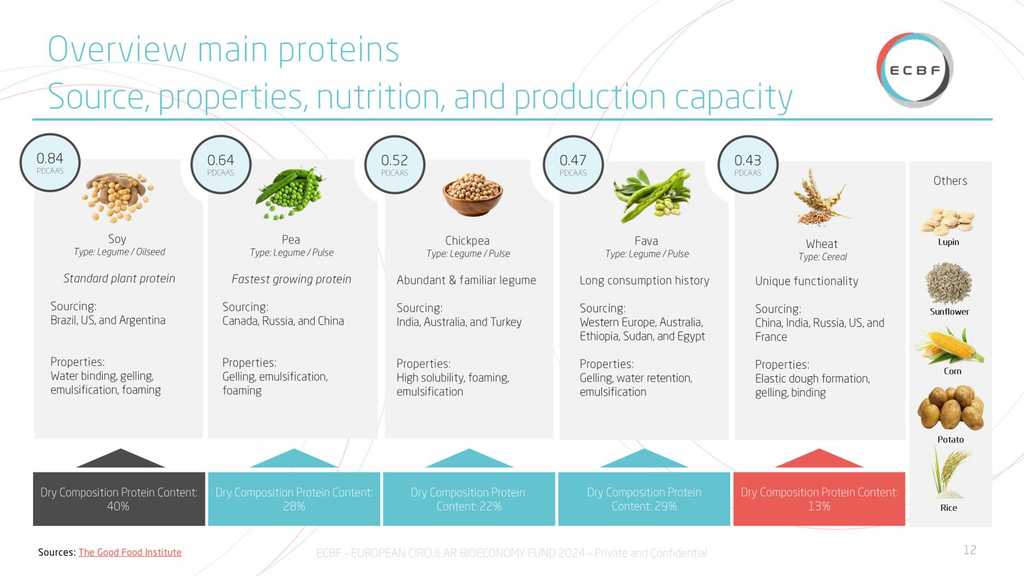
Soy protein isolates, containing about 90% protein, are widely used for their complete amino acid profile and versatility. They are commonly found in meat substitutes, dairy alternatives, and a variety of processed foods. Soy’s ability to emulsify, gel, and bind water makes it a favorite for creating textures that mimic animal-based products. It’s abundantly available, being grown as a crop for both human and animal consumption. Despite being an allergen, soy as an ingredient has been used and optimized for decades.
Pea protein isolates have gained significant traction in recent years. With a protein content of around 80–85%, pea protein is also valued for its supposedly hypoallergenic properties – although some newer evidence points to risks for people with i.e. peanut allergies. It is extensively used in dairy alternatives like milk, yogurt, and cheese substitutes, as well as in meat analogs such as burgers and sausages. Pea protein’s good emulsification and water-binding capacities contribute to desirable textures in these products.
Wheat proteins, particularly gluten, are essential in bakery applications due to their unique viscoelastic properties, which provide structure and chewiness to bread and baked goods. Wheat protein isolates are also used in combination with other plant proteins to improve the texture of meat substitutes, enhancing their fibrousness and bite.
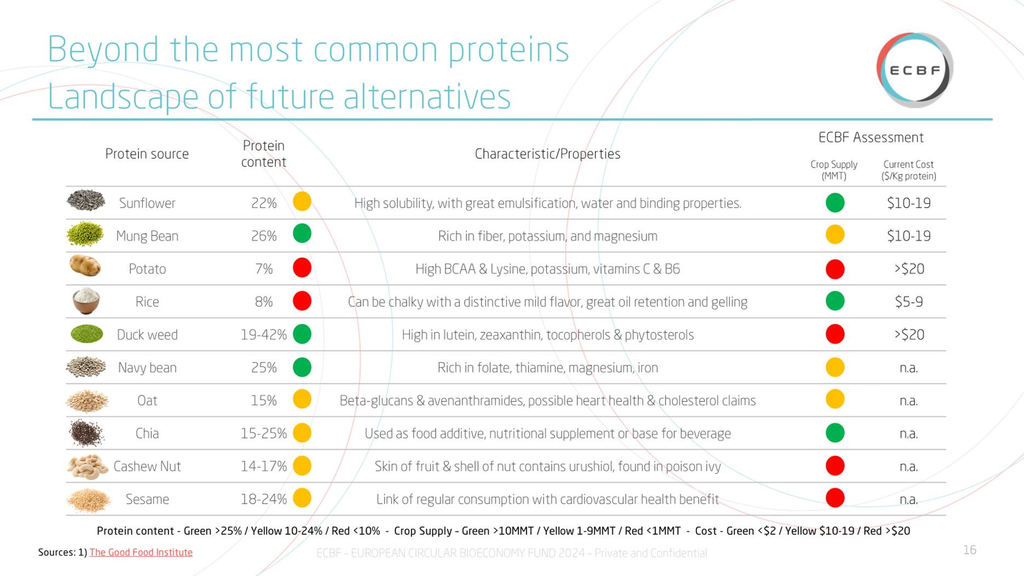
Emerging sources of plant protein isolates are expanding the landscape, offering new functionalities and benefits. Chickpea protein isolates, which we further touch upon later in the Deep Dive, are becoming popular for their excellent emulsification properties and neutral flavor. They are particularly suitable for egg replacements and gluten-free bakery products, providing structure and moisture retention. Fava bean protein is another rising star, offering high protein content and good foaming properties, making it useful in confectionery and bakery applications.
Canola protein isolates are gaining attention due to their high nutritional quality and functional versatility. Extracted as a by-product of canola oil production, they present a sustainable option that also boasts good solubility and emulsifying properties. Canola protein can enhance the nutritional profile of dairy alternatives and beverages.
Looking to the future, several novel plant protein sources are on the horizon. Potato protein isolates, despite being more expensive, offer exceptional foaming and emulsifying capabilities, which are valuable in specialized applications like whipped toppings and gluten-free products. This functionality might in fact be so valuable that it could offset the high cost for some applications. Oat protein isolates are emerging due to oats’ health benefits and suitability in creamy dairy alternatives.
Other potential sources include sunflower, mung bean, rice, duckweed, and lupine. These proteins are being explored for their unique functional properties and sustainability profiles. For instance, mung bean protein is known for its gelation properties, making it a promising candidate for egg replacements. Duckweed, a fast-growing aquatic plant, offers high protein content and a minimal environmental footprint, positioning it as an exciting prospect for sustainable protein production.
However, novel raw materials face challenges that hinder widespread adoption. In a catch-22 type situation, the relative low abundance of some of these crops being grown means that costs are higher and supply chains are not optimized. Second, the side products from protein extraction need to be functional and accessible to offset the higher cost from the previous point. An exception could exist for protein sources that provide some vastly superior functionality – like the case for potatoes.
Industry Perspectives on Plant Proteins
DSM-Firmenich and Canola Protein
Wim Hilbrands, who is leading the joint venture Olatein between DSM-Firmenich and the French company Avril, highlights their work with canola protein, a relatively new player in the plant protein sector.
“The nice thing about canola protein is that inherently it’s a very nice protein; it’s a very functional protein, also very high nutritional quality, PDCAAS close to one,” he states. PDCAAS is, in short, a way to measure the quality of protein. It tells us how well a protein provides all the essential amino acids – and the closer it is to one, the better it is in terms of its amino acid profile and also digestibility.
DSM-Firmenich has developed an innovative process for extracting canola protein without using solvents and at low temperatures to preserve the protein’s native state.
“That is all to preserve the quality of the protein, to leave the protein in a native state,” Hilbrands explains, emphasizing the importance of maintaining solubility and sensory properties.
However, he points out several hurdles in bringing plant proteins like canola to the mainstream. One significant challenge is application knowledge.
“Proteins influence everything—they influence the color, the taste, the texture, the nutritional quality of the end product,” he says. This complexity necessitates extensive collaboration with customers to develop suitable recipes and processing methods for various applications. Additionally, scaling up production is capital-intensive.
“Proteins require expensive facilities to make… you need to find money basically to build a plant, which might be a little bit easier for larger companies,” Hilbrands notes.
He also stresses the importance of value chain optimization, including raw material sourcing and byproduct valorization, to ensure economic viability.
RootExtracts and Potato Protein
Vidyanat Gururajan, CEO of RootExtracts, presents the potential of potato protein as a versatile and functional plant-based ingredient. Despite potatoes containing only 2–3% protein, their global abundance makes them a viable source of plant-based proteins.
“When you think about the versatility and the functionality that it brings, it can be a very good replacement… it’s highly nutritious and can help in textural enhancement,” Gururajan remarks.
RootExtracts focuses on extracting high-functional potato protein concentrates, which have applications in plant-based meat alternatives, bakery products, and confectionery.
He also highlights sustainability as a core aspect of their approach. The company utilizes out-grade potatoes—those unsuitable for retail—that would otherwise become animal feed or be used in anaerobic digestion for energy. “What we really want to create is a very local, circular sustainability,” he explains.
By processing these potatoes locally, they reduce waste and create a sustainable protein source. However, challenges exist, such as the low inherent protein content in potatoes. To address this, RootExtracts is exploring innovations like gene editing to enhance protein levels.
“We are potentially looking at how could we enhance the protein content within a potato, not through GMO, but through gene editing,” Gururajan says.
The company is also delving into biorefinery concepts to extract high-value compounds from potatoes. Scaling up production requires strategic partnerships, exemplified by their collaboration with Branston, the UK’s largest potato retail packer, to secure a steady supply of raw materials.
Roquette and Pea Protein
“Pea protein has emerged in recent years as a kind of key new protein alternative going into several new product launches, definitely with high growth,” Benjamin Voiry, Plant Protein Marketing Leader at Roquette, explains. Roquette, with over 90 years of experience, has heavily invested in pea protein, adapting facilities and building new ones, such as a factory in Canada.
According to Voiry, pea protein offers good nutritional value and functional properties without the allergen concerns associated with soy and wheat proteins.
“We always have to think these two things are very important—it’s not just nutrition, there’s also functionality,” he emphasizes.
However, Voiry acknowledges that the market and the protein itself are not yet mature.
“There’s still an area of improvement; the offer is not mature, the market is not mature,” he says, pointing out the need for continued innovation in processing and application development.
External factors also pose challenges. Trade dynamics have shifted due to anti-dumping duties in the USA affecting Chinese pea protein imports. “We are really in a market that has been changing in the last year… there’s a lot of change,” Voiry says.
These changes impact global supply chains and require companies to adapt quickly. To overcome these hurdles, Roquette is innovating in processing methods, creating various types of pea protein isolates with tailored functionalities for different applications. They assist customers in formulating products, recognizing that helping customers to formulate with these ingredients and making different concepts is quite critical. Additionally, they are exploring other protein sources like fava beans.
“Fava is very interesting because… you’ve got some slight differences in terms of sensory profile and functionalities,” Voiry explains, which points to a strategic diversification to meet market demands.
Innovative Startups Transforming the Landscape
Several startups are making significant strides in the plant protein isolate space by introducing novel sources and advanced processing technologies. Despite facing some of the same challenges as their larger counterparts, including market acceptance, scalability, and the need for functional, affordable products without off-tastes, these companies are pushing the boundaries of innovation.
Magdalena Kozłowska, CEO and co-founder of NapiFeryn Biotech based in Poland, is pioneering the extraction and isolation of canola proteins.”We focus on extraction and isolation of canola proteins. We start with the side stream, which is generated during canola processing,” she explains.
Kozłowska highlights the unique selling points of their products: “Natural flavor and color, label-friendly, highly soluble, nutritionally complete protein products with potential for abundant global supply at a competitive cost in use in multiple food applications.”
Their proprietary technology gently treats the raw material to preserve protein functionality without using extreme pH or temperatures. This process results in two coproducts: Raptane 90, a canola protein isolate with up to 90% protein content, and Raptane 30, a canola protein and fiber mix with up to 45% protein.
The applications of their products range from dairy alternatives and sports nutrition to bakery and meat analogs. Their ingredients have also been proven in plant-based yogurts, drinks, and gluten-free bread, Kozłowska says.
Facing challenges in scaling up and market entry, Magdalena emphasizes the need for partnerships.
“We know that we cannot do this in isolation. We need the competencies that we ourselves don’t have,” she acknowledges.
Gregory Belt, CEO of InnovoPro, is leading efforts to harness the potential of chickpea protein.
“At InnovoPro, we’ve been working on chickpea protein for over 10 years. We are the chickpea experts,” he states.
InnovoPro has developed a sustainable process without the use of chemicals or solvents to produce a range of chickpea-based protein products. The company addresses specific consumer problems through three product platforms: everyday nutrition, clean-label solutions, and longevity and weight management.
“Consumers desire shorter ingredient labels, they desire allergen-free, they desire ingredients they recognize,” Belt notes.
In a “peashell”, Belt jokes, what sets apart InnovoPro is their development of clean label solutions – shorter ingredient lists with recognizable, allergen-free components. InnovoPro’s chickpea protein enables food manufacturers to remove additives like emulsifiers and gums. Their product, PureBev, exemplifies this by replacing lecithin and gums in plant-based beverages, allowing for products with as few as four ingredients without sacrificing stability or texture.
They also offer products like CP Pro 70, a 70% protein concentrate, and CP Chickpea Egg White, a whole egg replacement ideal for bakery applications. InnovoPro tackles the challenge of improving taste and functionality in plant-based products while maintaining a clean label.
“Can we tackle that really hard challenge? And we’ve been working on this for quite a while and we have proven that we can,” he emphasizes.
Despite chickpea protein being a higher-cost ingredient, InnovoPro focuses on solving critical problems where their protein’s unique properties add significant value.
“Chickpea has to come in and solve critical problems in each of these spaces,” Belt explains, acknowledging the need for targeted applications where chickpea protein offers distinct advantages.
Peter Thorninger, chairman of cReal, is advancing the use of oat protein through innovative processing methods.
“We have a dry heat treatment. That means that it doesn’t start to turn into a porridge already in the early stage,” he explains.
This unique process avoids the use of steam and allows for the production of a drink powder (a milk powder replacer) and a fiber powder without the need for solvents.
Peter highlights the benefits of their oat-based products.
“There is simply no off-taste in our product. We’ve had that tested now with consumers, with customers, in ice cream,” he notes.
By focusing on applications like ice cream, cream cheese, and yogurt, cReal aims to deliver products with good taste, competitive cost-in-use, and a lower carbon footprint compared to traditional dairy.
“We reduce the CO2. by 40 to 50% versus conventional ice cream,” he remarks.
cReal is addressing the challenge of scalability by building a factory that has commercial volumes as of next now. They have customers lined up and are working on expanding their applications into yogurt and chocolate and functional food as their fiber product is high on betaglukan which has documented effect on cholesterol.
“What is really key is also the application knowledge that others don’t have,” Thorninger underscores.
Explainer Box: Venture Dynamics
An overview of funding highlights from venture capital (VC) investments in the plant protein concentrate & isolate space, from ECBF associate Mridul Pareek, based on public and collected data.
VC-Backed Companies and Deals:
- Identified 27 companies backed by VCs in recent years.
- Recorded 86 deals from 2012 to the present (Q2 2024).
- Total investments amount to approximately €400–500 million.
Comparison with Other Sectors:
- Fewer companies and deals compared to sectors like texturization, mycelium, or textiles.
- Significant involvement of corporate entities in innovation and market introduction of protein isolates and concentrates.
Recent Funding Highlights:
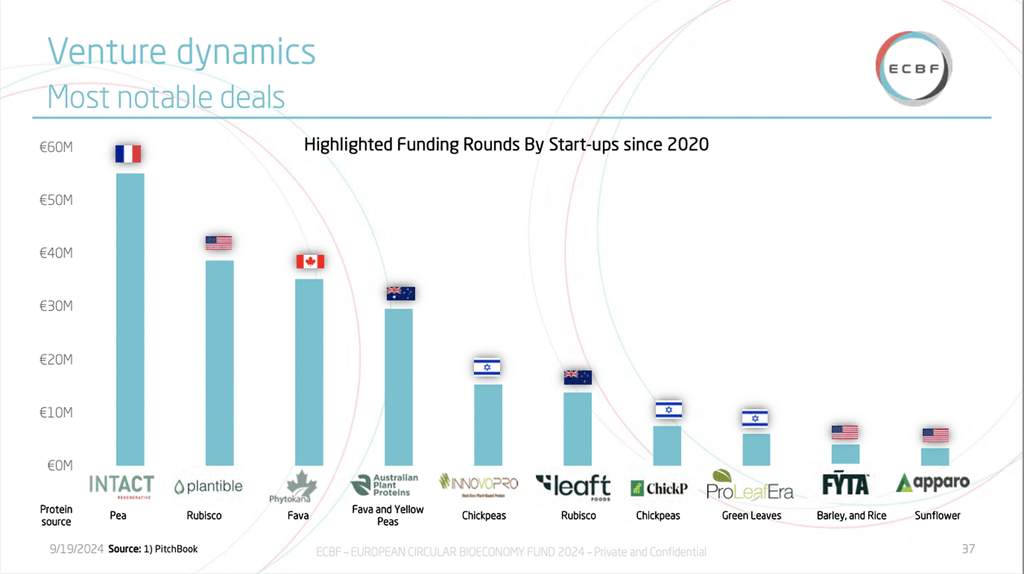
- Phytokana secured funding led by ATB.
- The largest deal recorded is €67 million for Puris.
- Investments are a small fraction of the overall global plant-based ingredient market.
Protein Sources and Company Focus:
- Companies are exploring various protein sources:
- Chickpea (e.g., InnovoPro).
- Fava Bean.
- Rubisco—emerging interest with early-stage companies.
- Continued dominance of pea and soy proteins.
Geographical Distribution:
- Majority of VC-backed companies are based in the USA and Europe.
- Notable increase in production capacity in China, though many are small to medium-sized enterprises not VC-backed.
Market Dynamics and Challenges:
- Anti-dumping duties in the USA on Chinese pea protein due to sales below fair value.
- Tariffs ranging from 112% to 270% imposed.
- Australian Plant Proteins filed for administration despite previously raising funds, citing high raw material costs and interest rates.
Notable Funding Rounds Since 2020:
- Significant investments in companies working with:
- Pea protein (e.g., Puris with €55 million).
- Rubisco protein (e.g., Plantable in the USA).
- Fava bean, chickpea, and sunflower proteins.
- Funding concentrated in Israel, France, and the USA.
Corporate Investments and Collaborations:
- Companies like Roquette, ADM, Kerry, and Ingredion have invested in expanding production capacity or acquiring companies.
- Lantmännen, a Swedish agricultural cooperative, invested €100 million in a protein plant for pea and fava bean production, operational by 2027.
Motivations for Mergers and Acquisitions (M&A):
- Expansion of Product Portfolios: To meet new market trends and demands.
- Bypassing R&D Phases: Leveraging external expertise and innovations.
- Cost Reduction: Lowering expenses through optimized raw material sourcing, supply chains, and labor.
- Market Share Enhancement: Utilizing cross-border deals to increase market presence and secure distribution channels.
Recent M&A Transactions:
- Highlighted acquisitions of companies to expand protein offerings.
- Example: Avril announces its acquisition of Sunbloom Proteins, a young German company specialized in producing and marketing sunflower proteins for human consumption. https://presse.avril.com/avril-acelerates-its-presence-in-the-plant-based-protein-sector-by-acquiring-sunbloom-proteins/?lang=en
Key Takeaways and Conclusions:
- Diverse Protein Sources: Growing interest in novel proteins beyond pea and soy.
- Differentiation Strategies:
- Establishing intellectual property (IP) protections.
- Building production capacity.
- Enhancing functional properties of proteins.
- Regulatory Hurdles: Challenges in bringing new protein sources to market swiftly.
- Cost Factors:
- Influenced by raw material availability, processing technologies, and economies of scale.
- Necessity for substantial R&D investments to innovate and improve products.
- Increasing M&A Activity: Reflects a strategic move by companies to expand protein portfolios and achieve global reach.
- Industry Outlook:
- Collaboration between startups and established companies is crucial.
- Companies aim to address market demands while navigating financial and regulatory challenges.
- Ongoing efforts to secure local and sustainable supply chains for plant-based proteins in regions like Europe.
“Can’t do this in isolation”
The plant protein isolate industry stands at a juncture where collaboration between established corporations and innovative startups is essential for continued growth and advancement. As the demand for sustainable, functional, and high-quality plant-based proteins escalates, the synergy created through partnerships can accelerate innovation, overcome challenges, and drive the industry forward.
As Benjamin Voiry said, the industry must embrace collaboration to thrive.
“We need to exchange and understand each other in order to do it more efficiently,” he asserts.
The complexity and resource-intensive nature of developing new plant protein isolates make collaboration not just beneficial but indispensable. Benjamin Voiry from Roquette underscores this need.
“We have this growing open innovation topic where we need to exchange and understand each other in order to do it more efficiently. We cannot burn cash for all topics and try to master everything. It’s true for investment, investment in operation, investment in research,” he states.
For startups, collaboration with established companies can provide access to resources, scaling capabilities, and market channels that might otherwise be out of reach.
Established corporations recognize the unique value that startups bring to the table, particularly in terms of agility, specialized knowledge, and novel approaches. Peter Thorniger of cReal notes the critical advantage of application expertise.
“What is really key is also the application knowledge that others don’t have,” he says.
Collaboration offers a strategic pathway to address shared challenges within the industry. Scaling production can be facilitated through joint ventures, allowing for the expansion of production capacities. Resource optimization is achieved by pooling resources, enabling companies to invest more efficiently in research, development, and operations. Market access and expansion are enhanced as partnerships enable startups to leverage the extensive distribution networks and market presence of established companies, accelerating the introduction of new products to consumers. Additionally, navigating regulatory landscapes becomes more manageable with the experience and support of larger corporations.
Magdalena Kozłowska of NapiFeryn Biotech: “We know that we cannot do this in isolation.”